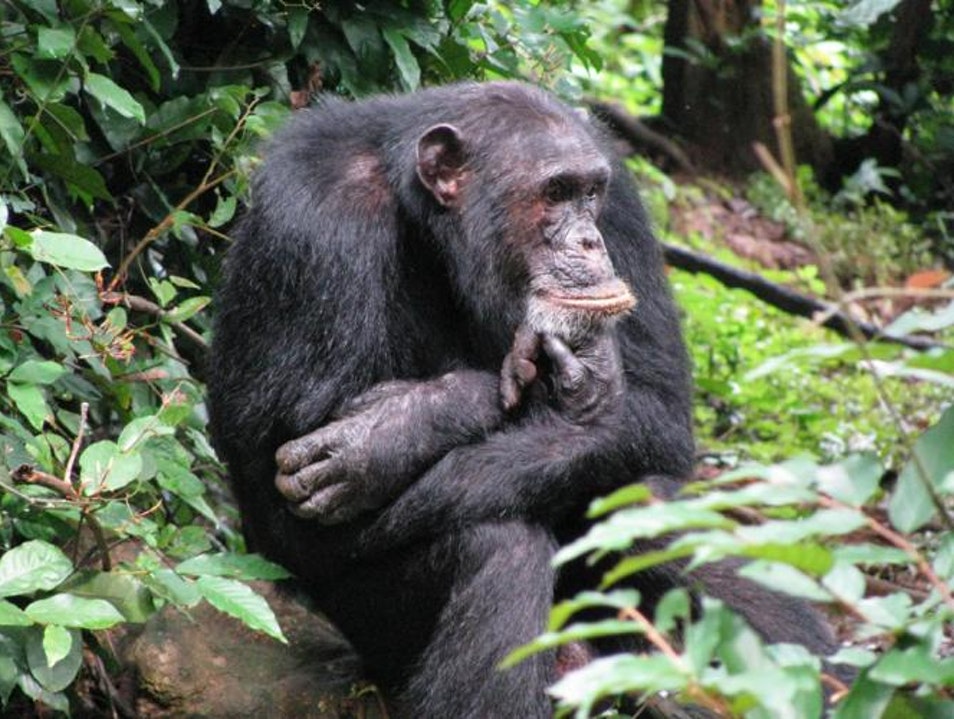
Gombe is a fragile strip of chimpanzee habitat straddling the steep slopes and river valleys that hem in the sandy northern shore of Lake Tanganyika. Its chimpanzees – habituated to human visitors – were made famous by the pioneering work of Jane Goodall, who in 1960 founded a behavioural research program that now stands as the longest-running study of its kind in the world. The matriarch Fifi, the last surviving member of the original community, only three-years old when Goodall first set foot in Gombe, is still regularly seen by visitors.
Chimpanzees share about 98% of their genes with humans, and no scientific expertise is required to distinguish between the individual repertoires of pants, hoots and screams that define the celebrities, the powerbrokers, and the supporting characters. Perhaps you will see a flicker of understanding when you look into a chimp’s eyes, assessing you in return – a look of apparent recognition across the narrowest of species barriers.
BIRDS
The park’s 200-odd bird species range from the iconic fish eagle to the jewel-like Peter’s twinspots that hop tamely around the visitors’ centre.
After dusk, a dazzling night sky is complemented by the lanterns of hundreds of small wooden boats, bobbing on the lake like a sprawling city.






 Reach us on WhatsApp